Nigeria, Senegal and The Gambia: Three Different Talent Development Models
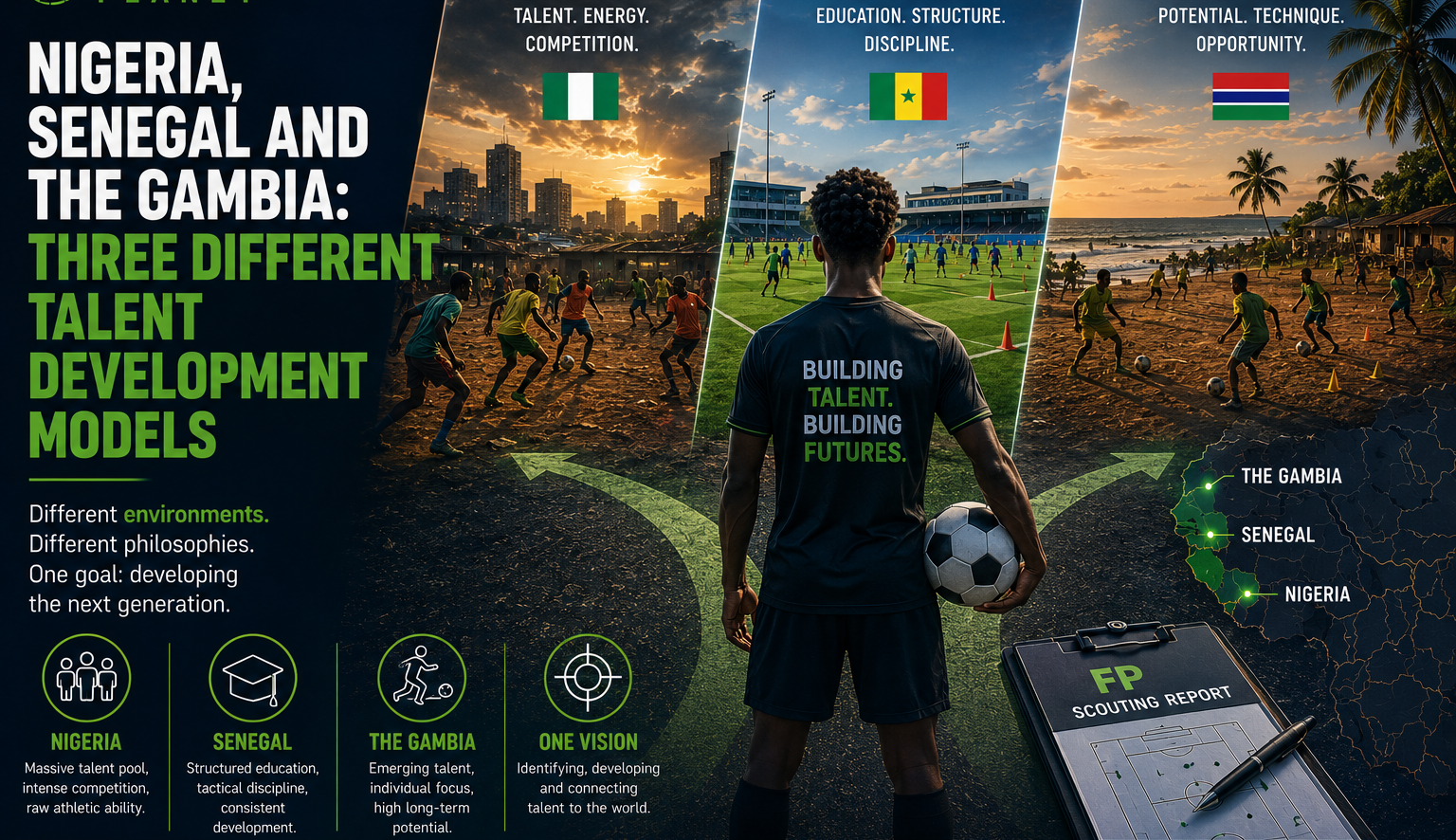
West Africa continues to establish itself as one of the world's most important football talent regions. Every year, hundreds of players leave the continent to pursue professional careers across Europe, Asia and the Middle East. However, treating West Africa as a single scouting market overlooks the significant differences between individual countries. Nigeria, Senegal and The Gambia each represent unique talent development ecosystems, shaped by different football cultures, infrastructures and development philosophies. Understanding these differences is essential for clubs, scouts and recruitment departments aiming to identify the right players for the right environments.
Nigeria: Scale, Competition and Athletic Potential
Nigeria possesses one of Africa's largest football ecosystems. With a population exceeding 220 million people, the country benefits from an enormous player pool and an exceptionally competitive football culture. Thousands of academies, private training centres and grassroots tournaments operate across the country, producing players with impressive athletic profiles. Nigerian football is often characterised by explosive pace, physical strength, confidence in one-versus-one situations and a strong competitive mentality developed through intense domestic competition. Because the player market is so large, competition for visibility is equally intense. Many talented players remain undiscovered simply because the supply exceeds scouting capacity. This creates opportunities for clubs willing to invest time in systematic identification rather than relying solely on established academies. Nigeria offers exceptional depth but also requires careful filtering. Technical quality varies significantly between academies, making structured scouting processes essential for reducing recruitment risk.
Senegal: Structure, Education and Tactical Development
Senegal has earned international recognition for producing technically and tactically mature footballers. Over the past decade, investment in coaching education, academy structures and long-term player development has created one of Africa's most respected football systems. Rather than relying exclusively on athleticism, many Senegalese academies place considerable emphasis on tactical understanding, positional discipline and decision-making. This educational approach often produces players who adapt more quickly to European football environments. The success of Senegal's national teams at youth and senior level reflects the consistency of this development model. Professional clubs increasingly view Senegal as a market capable of delivering players who combine physical qualities with tactical intelligence and strong football education. Although the overall player pool is smaller than Nigeria's, the average level of structured development is often remarkably consistent.
The Gambia: Emerging Talent with High Development Potential
The Gambia represents a different type of opportunity. Despite its relatively small population, the country has built a growing reputation for producing technically gifted young footballers with significant long-term potential. Local academies increasingly focus on individual player development, allowing talented prospects to receive greater attention than they might in much larger football markets. Many Gambian players display excellent technical ability, creativity in possession and strong adaptability. Their physical development may still require further work, but their learning capacity often makes them attractive projects for clubs focused on long-term player development. Because international scouting activity remains comparatively limited, The Gambia continues to offer value opportunities. Clubs that establish relationships with local academies before competition intensifies may gain access to high-potential players earlier in their development cycle.
Three Markets, Three Different Recruitment Strategies
Comparing these three countries demonstrates why successful recruitment cannot rely on a single scouting approach. Nigeria rewards broad scouting networks capable of filtering enormous talent volumes. Senegal rewards clubs seeking players with stronger tactical foundations and greater immediate readiness for professional environments. The Gambia rewards organisations willing to invest in long-term development and identify emerging prospects before their market value rises significantly. Each market requires different evaluation criteria, different risk assessments and different recruitment timelines.
Looking Beyond Talent
Identifying talented players is only the beginning of successful recruitment. Clubs must also evaluate character, adaptability, education, psychological resilience and the player's ability to transition into a new football culture. These factors frequently determine whether promising talent becomes a successful professional. West Africa should therefore not be viewed as a single talent source but as a collection of distinct football ecosystems, each offering different competitive advantages. For modern scouting departments, understanding these differences is no longer optional. It is becoming one of the key competitive advantages in identifying tomorrow's professional footballers before the wider market recognises their potential.