Belgium and the Netherlands: Europe's Development Leagues
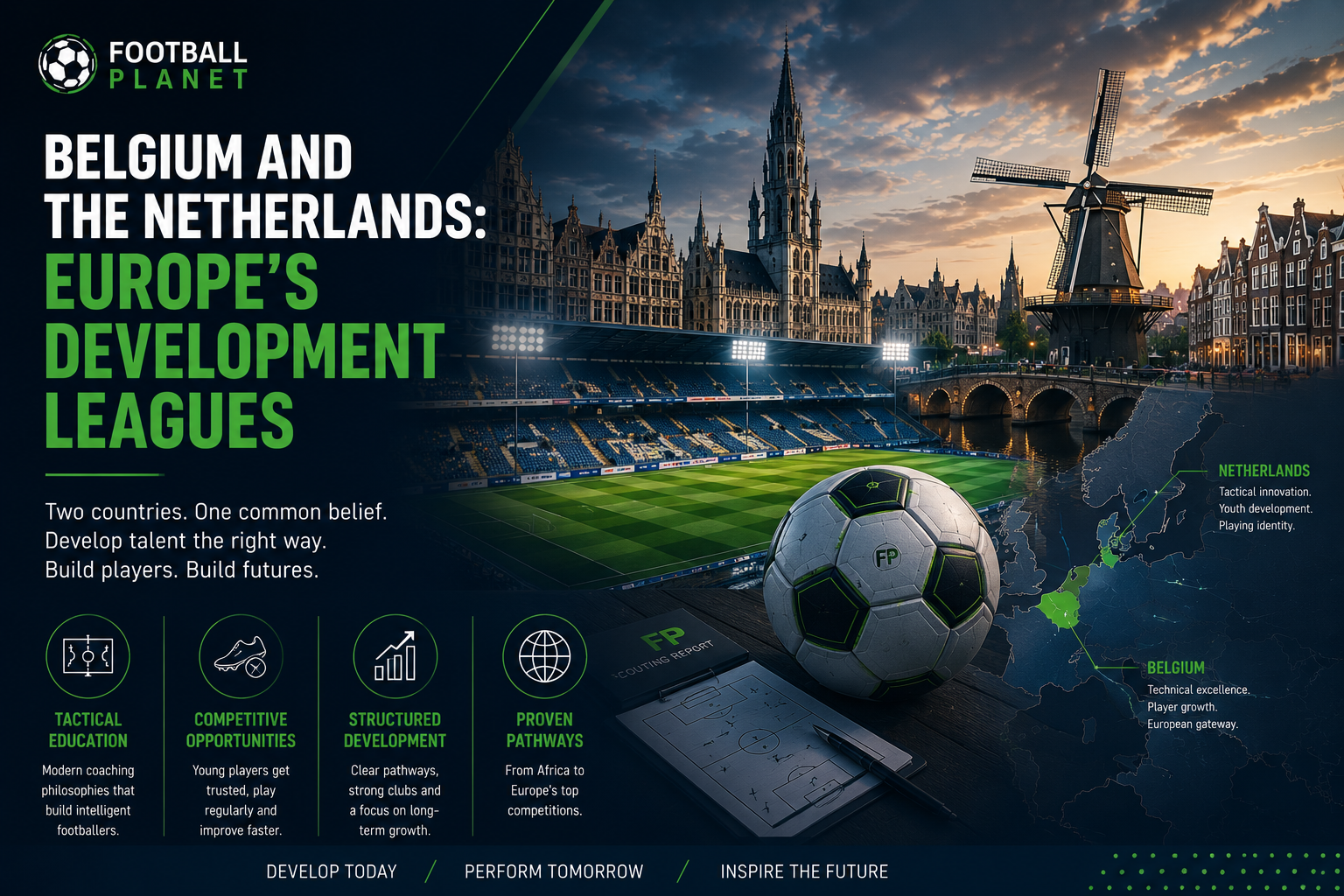
Football is full of destinations that attract global attention. Yet some of the game's most important work happens away from the spotlight. Belgium and the Netherlands have quietly established themselves as two of Europe's most effective development environments, consistently producing players capable of succeeding at the highest levels of the game. Rather than competing financially with Europe's biggest leagues, clubs across both countries have developed a different model. Their strength lies in identifying potential, creating structured development environments and preparing players for the next stage of their careers. For young footballers arriving from Africa or other emerging markets, these leagues often provide the ideal balance between opportunity, education and long-term progression.
Development Before Immediate Results
One of the defining characteristics of Belgian and Dutch football is the emphasis placed on player development. Technical ability remains important, but equal attention is given to tactical understanding, positional awareness, decision-making and continuous improvement. Young players are expected to learn every day, not simply perform every weekend. Coaches often work within clearly defined football philosophies that encourage intelligent decision-making, adaptability and collective play. The objective is not only to develop better footballers but also more complete professionals.
Opportunities to Compete
Development only becomes meaningful when players receive competitive opportunities. Across Belgium and the Netherlands, many clubs have demonstrated a willingness to trust young footballers with first-team responsibilities earlier than many larger European leagues. Consistent playing time allows players to accelerate their learning process under real competitive pressure. Each match contributes to tactical maturity, confidence and experience that cannot be replicated through training sessions alone. For ambitious players, regular football often proves more valuable than joining a prestigious club where opportunities remain limited.
Intelligent Recruitment Models
Belgian and Dutch clubs have earned strong reputations for identifying talent before market values increase significantly. Scouting departments increasingly combine traditional observation with performance data, video analysis and long-term projection. Recruitment decisions rarely focus only on current performance. Modern evaluation considers adaptability, mentality, learning capacity, professionalism and tactical intelligence alongside technical qualities. This broader assessment reduces recruitment risk while increasing the likelihood of successful long-term development. Finding talent is only the beginning. Creating the right environment remains equally important.
A Sustainable Football Economy
Player development has also become an essential part of the business model. Many clubs operate with sustainable financial strategies built around intelligent recruitment, structured coaching and carefully managed player progression. Instead of relying solely on commercial revenues, successful transfers often become a natural outcome of effective development. Players improve. Clubs strengthen their squads. Future transfer values increase. This creates a cycle that benefits both sporting performance and financial stability without sacrificing long-term planning.
A Gateway to Europe's Elite
For many footballers, Belgium and the Netherlands are not the final destination. They represent an important stage within a broader career pathway. Strong domestic competitions, European club tournaments and international visibility provide players with opportunities to demonstrate their abilities against high-quality opposition. Scouts from major European leagues closely monitor both competitions because they understand the quality of coaching and development taking place there. As a result, successful performances frequently lead to opportunities in larger leagues across Europe. The transition becomes more manageable because players have already adapted to European football, improved tactically and gained valuable professional experience.
Building Careers, Not Just Transfers
Modern football increasingly rewards long-term thinking. The most successful pathways are rarely defined by the fastest move but by the smartest sequence of decisions. Belgium and the Netherlands demonstrate how structured environments, patient development and competitive opportunities can unlock a player's full potential. For clubs, they offer sustainable recruitment models. For scouts, they provide valuable markets where talent continues to emerge. For players, they represent environments where learning never stops and progression remains the priority. In modern football, successful careers are built step by step. Belgium and the Netherlands continue to prove that development remains one of the most valuable investments the game can make.