Serbia's Football Production Line: Why European Clubs Keep Returning
A Nation That Consistently Produces Football Talent
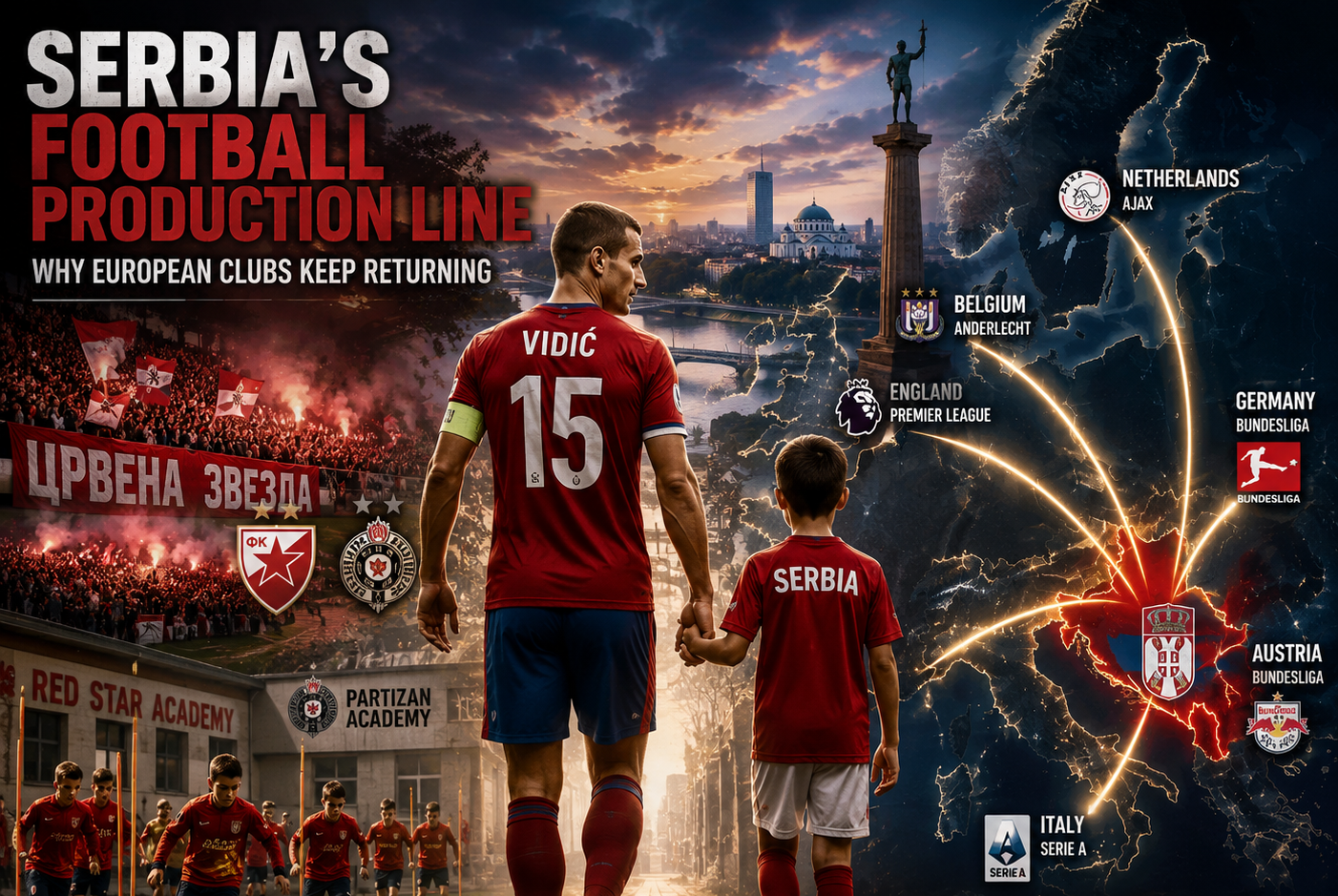
Few countries in Europe have developed a stronger reputation for producing professional footballers than Serbia. Despite its modest population of fewer than seven million people, the country continues to supply players to some of Europe's biggest leagues and clubs. From the Serbian SuperLiga to the UEFA Champions League, Serbian footballers are recognised for their technical ability, competitive mentality and readiness to perform under pressure. For decades, Serbia has maintained its position as one of Europe's most reliable talent-producing nations. Rather than relying on occasional golden generations, it has created a football ecosystem capable of developing elite players year after year. This consistency explains why scouts from England, Germany, Italy, Austria, Belgium and the Netherlands continue to monitor the Serbian market closely.
Academies That Prioritise Player Development
At the heart of Serbia's success lies its academy system. Clubs such as Red Star Belgrade, Partizan Belgrade, Vojvodina and Čukarički have earned strong reputations for identifying talented youngsters and preparing them for professional football. Training focuses heavily on technical quality, tactical understanding and decision-making from an early age. Young players are encouraged to develop creativity while simultaneously learning positional discipline and collective responsibility. As a result, Serbian footballers often display maturity beyond their age when making the transition to senior football. Equally important is the willingness of Serbian clubs to provide opportunities for young players. Rather than relying exclusively on experienced professionals, many clubs actively integrate academy graduates into their first teams, accelerating both their development and market value.
Mentality as a Competitive Advantage
Technical ability alone does not explain Serbia's football success. One of the country's defining characteristics is the mentality of its players. Serbian football culture places great emphasis on competitiveness, resilience and responsibility. Players grow up in demanding football environments where earning a place in the team requires consistency, discipline and mental strength. This competitive mindset often translates successfully to foreign leagues. Clubs recruiting Serbian players frequently highlight their professionalism, adaptability and willingness to compete for starting positions. These qualities reduce the risks associated with international recruitment and make Serbian players attractive long-term investments.
A Proven Pathway to Europe's Top Leagues
Serbia has established a clear development pathway that benefits both players and clubs. Many young talents first gain valuable first-team experience in the Serbian SuperLiga before moving to leagues that serve as stepping stones, including Belgium, Austria, the Netherlands and Scandinavia. From there, successful players often progress to Europe's biggest competitions. This structured progression benefits every stakeholder. Players receive regular competitive minutes, selling clubs generate sustainable transfer revenue, and buying clubs acquire footballers who have already demonstrated their ability in senior environments. Rather than producing players for immediate short-term profit, Serbia has developed a football economy centred on long-term player development and sustainable value creation.
Why Scouts Continue to Monitor the Serbian Market
For recruitment departments across Europe, Serbia remains one of the continent's most attractive scouting destinations. The country consistently offers technically accomplished players, strong tactical education and valuable competitive experience at transfer fees that are often significantly lower than those found in Western European markets. Serbian football also produces players across multiple positions, from commanding central defenders and intelligent midfielders to creative attacking players and prolific forwards. This diversity allows clubs with different recruitment strategies and financial resources to identify profiles that match their sporting philosophy. As data analysis and traditional scouting continue to complement one another, Serbia remains a market where statistical performance is frequently supported by strong football education and competitive experience.
A Strategic Market for Modern Recruitment Modern football recruitment increasingly focuses on identifying sustainable value rather than reacting to short-term trends. Serbia perfectly illustrates why certain football markets continue to outperform expectations over decades rather than seasons. Its combination of academy education, competitive culture, clear player pathways and consistent talent production has created a model that continues to attract clubs from across Europe. For scouts, sporting directors and recruitment analysts, Serbia is far more than another football nation in the Balkans. It is one of Europe's most dependable talent production lines—a market where long-term investment in player development continues to deliver outstanding football and commercial returns. As European recruitment becomes increasingly competitive, Serbia is likely to remain one of the first destinations for clubs seeking technically gifted, mentally resilient and economically valuable football talent.