Everton FC: From Financial Stabilisation to a New Investment Opportunity
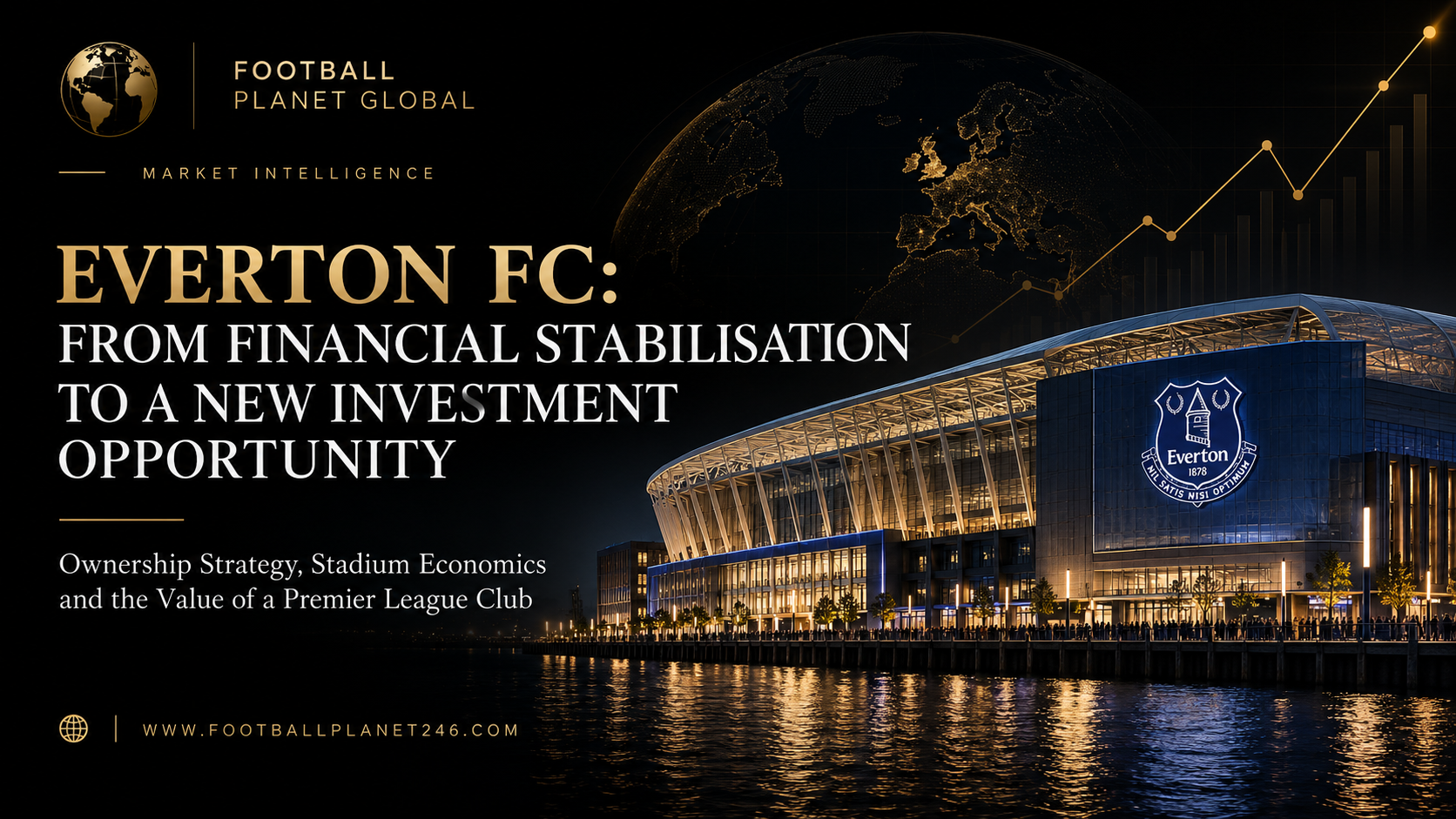
A New Chapter for Everton's Ownership
Less than two years after acquiring Everton Football Club, The Friedkin Group is considering a significant change in its investment strategy.
On 9 October 2026, the American ownership group confirmed that it was exploring new investment options, including the potential sale of a controlling interest in the Premier League club.
The announcement raises an important question: Is Everton approaching another ownership transition, or entering a new phase of investment-led growth? (BBC Sport)
Financial Stabilisation: What Do the Numbers Reveal?
Everton's latest published financial results demonstrate progress, although important challenges remain.
For the financial year ending 30 June 2025, the club reported record revenue of £196.7 million, compared with £186.9 million in 2023/24.
Annual losses declined significantly, from £53.2 million to £8.6 million.
Commercial revenue improved, while broadcast income remained a major component of the club's financial structure, generating £129.2 million.
However, the reduction in reported losses requires careful interpretation.
The accounts included a £49.2 million profit associated with the transfer of Everton Women and Goodison Park Stadium entities to the wider ownership group.
Excluding this exceptional transaction, the underlying financial position remained considerably more challenging than the headline loss suggested.
Financial stabilisation is an important achievement, but it should not automatically be confused with sustainable profitability. (Everton – Annual Report and Accounts 2024/25)
Hill Dickinson Stadium: A Strategic Investment Asset
One of Everton's most significant assets is its new Hill Dickinson Stadium.
With a capacity of approximately 52,769, the venue represents more than a replacement for Goodison Park.
It creates opportunities to expand premium hospitality, commercial partnerships, matchday experiences and potentially non-football events.
Everton's 2024/25 financial statements recorded cumulative stadium development expenditure of £813 million.
The commercial importance of the stadium extends beyond additional seating capacity. A modern venue can strengthen a club's long-term revenue potential and improve its attractiveness to prospective investors.
Nevertheless, infrastructure investment also introduces financial responsibilities.
Debt servicing, maintenance costs and the ability to generate consistent commercial returns remain essential considerations. (Everton – Stadium Information)
The Investment Valuation Question
According to a report published by The Guardian on 9 October, Everton could attract an indicative valuation of approximately £800 million, including around £380 million in long-term debt.
These figures represent reported expectations rather than an agreed transaction value.
The distinction between enterprise value and the amount ultimately received by shareholders is particularly important.
Prospective investors must consider outstanding liabilities, future capital requirements and the financial resources necessary to maintain Premier League competitiveness.
Everton's historical identity, supporter base and new stadium strengthen its investment proposition, but valuation ultimately depends on expected future cash generation and associated risks. (The Guardian – Everton Ownership and Investment)
The Football Planet Perspective
Everton illustrates how football investment increasingly involves more than acquiring sporting assets.
Infrastructure, financial restructuring, commercial expansion and ownership strategy all contribute to a club's investment profile.
The next phase will depend on whether new or existing investors can translate these assets into sustainable financial performance and competitive progress.
Everton's investment story is not simply about the potential sale of a football club. It is about whether financial stabilisation and modern infrastructure can unlock long-term business value.