Before Dashboards and AI: When Football Data Fit in a Small Book
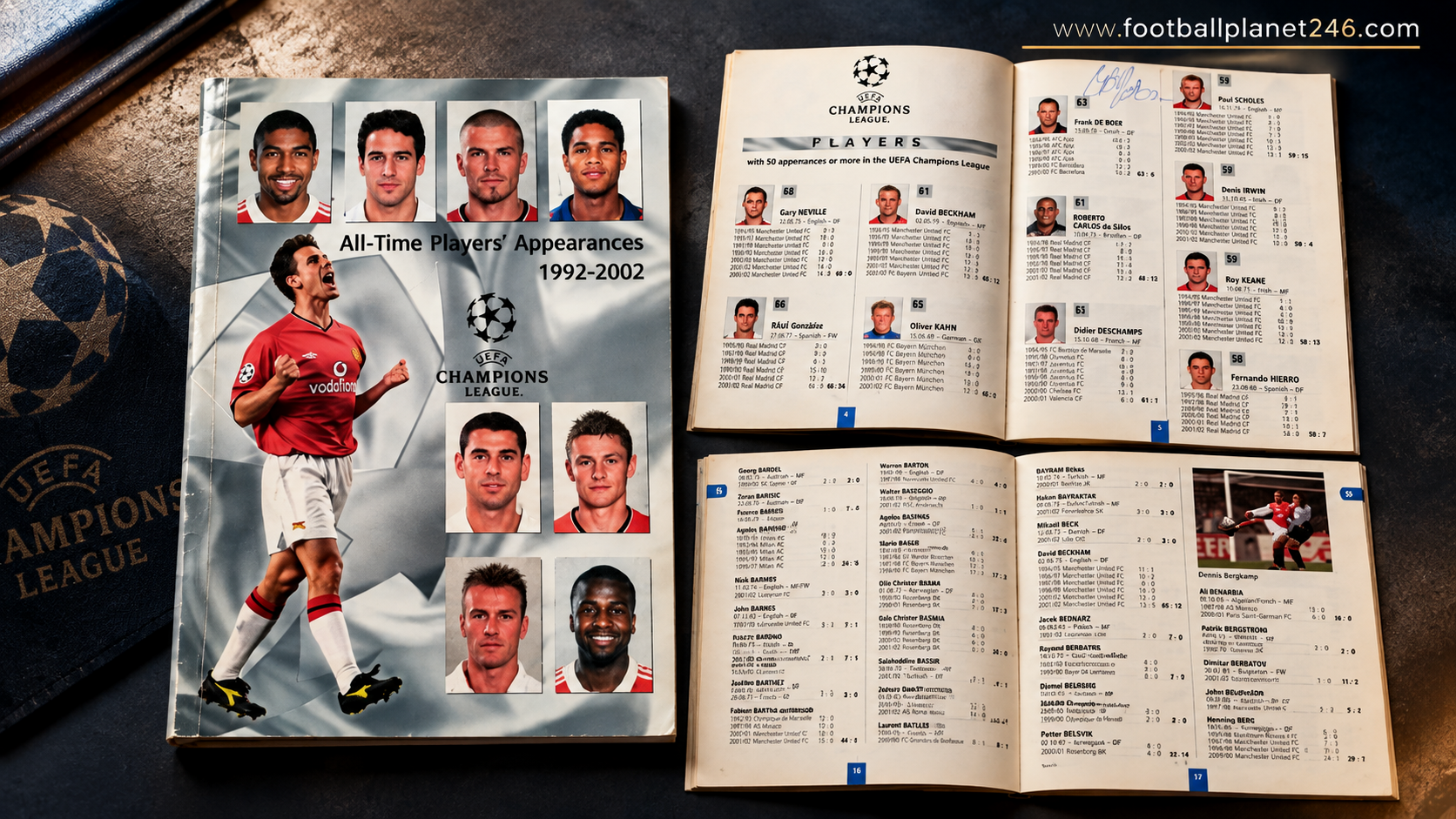
A few days ago, I found something in my football collection that immediately transported me back to a very different era of the game.
It was a small UEFA Champions League booklet titled:
“All-Time Players’ Appearances 1992–2002.”
Inside, the structure is simple.
Player names.
Clubs.
Seasons.
Appearances.
Goals.
No interactive dashboards. No filters. No video clips. No expected goals models. No automated reports.
Just football information, printed and organised on paper.
And yet, looking through it today raises an interesting question:
How much has football data really changed?
The Information Was Always There
The modern UEFA Champions League began in 1992/93, following the transformation of the old European Cup format. UEFA.com
During that first decade, football statistics were already valuable.
Supporters, journalists, coaches and analysts wanted to know who had played the most matches, which clubs players represented, how careers developed across seasons and where the competition’s most experienced players came from.
The information existed.
What did not exist was today’s speed, depth and accessibility.
A booklet like this represented a snapshot of knowledge at a particular moment in time.
Today, the same question can generate thousands of data points within seconds.
From Printed Statistics to Digital Football
Football analysis has moved far beyond simple appearances and goals.
Modern clubs can work with:
- event data,
- physical tracking,
- video analysis,
- expected-goal models,
- passing networks,
- pressing metrics,
- recruitment databases,
- player comparison tools,
- and increasingly, AI-assisted analysis.
UEFA itself now describes modern performance analysis as a combination of coaching expertise and advanced technology, with technical and tactical analysis shared across European football. UEFA.com
The difference is therefore not that football suddenly discovered data.
The difference is what football can now do with it.
More Data Does Not Automatically Mean Better Decisions
This may be the most important change of all.
In 2002, one of the main challenges was obtaining enough information.
In 2026, the opposite problem often exists.
There is an enormous volume of football data available.
The challenge is deciding:
Which numbers actually matter?
Which statistics describe performance accurately?
Which indicators are useful for recruitment?
Which patterns can predict development?
And which numbers simply create noise?
That is the point where data becomes football intelligence.
A Personal Detail
One detail makes this particular copy especially personal to me.
Frank de Boer signed it for me at the time.
It is a small reminder that this is not simply an archive item, but part of my own football memories.
Looking at it now, however, it represents something else too.
It shows how dramatically the football information environment has changed in just over two decades.
The Football Planet Perspective
Football has moved from printed statistical records to an ecosystem of live data, scouting platforms, video analysis and advanced modelling.
But technology alone is not the advantage.
The real advantage comes from understanding what the information means.
Data provides the evidence.
Analysis provides the context.
Football intelligence turns both into decisions.
Twenty-five years ago, much of the information could fit inside a small book.
Today, we have more football data than ever before.
The challenge is knowing what to do with it.